

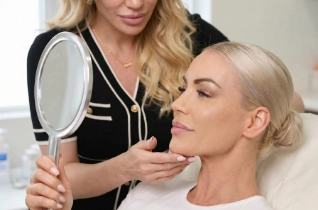
Procedure gallery View patient results

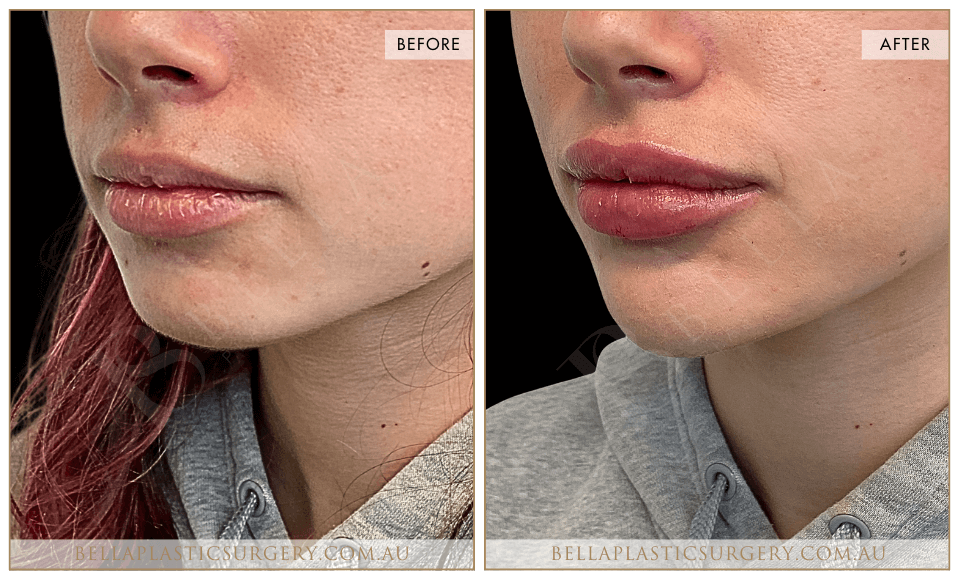
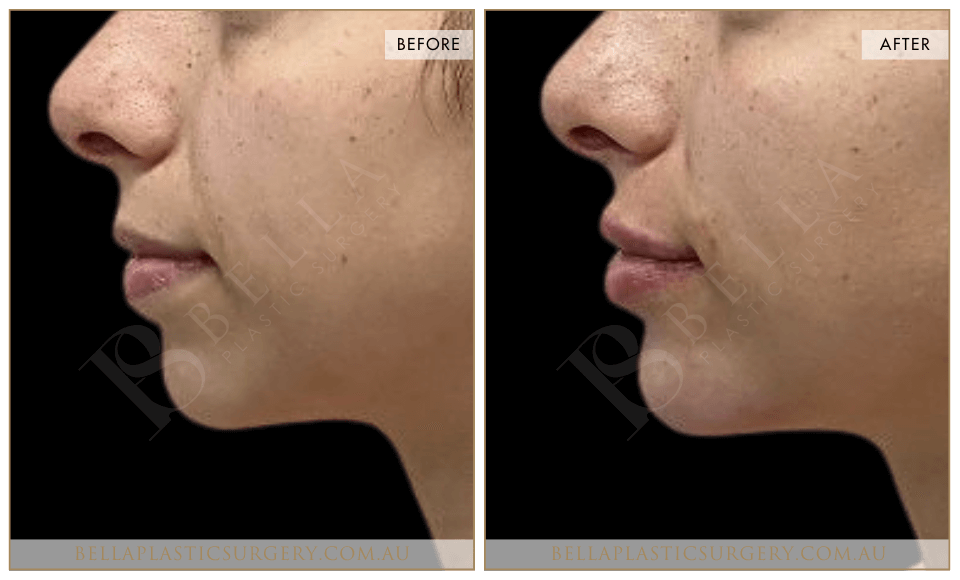
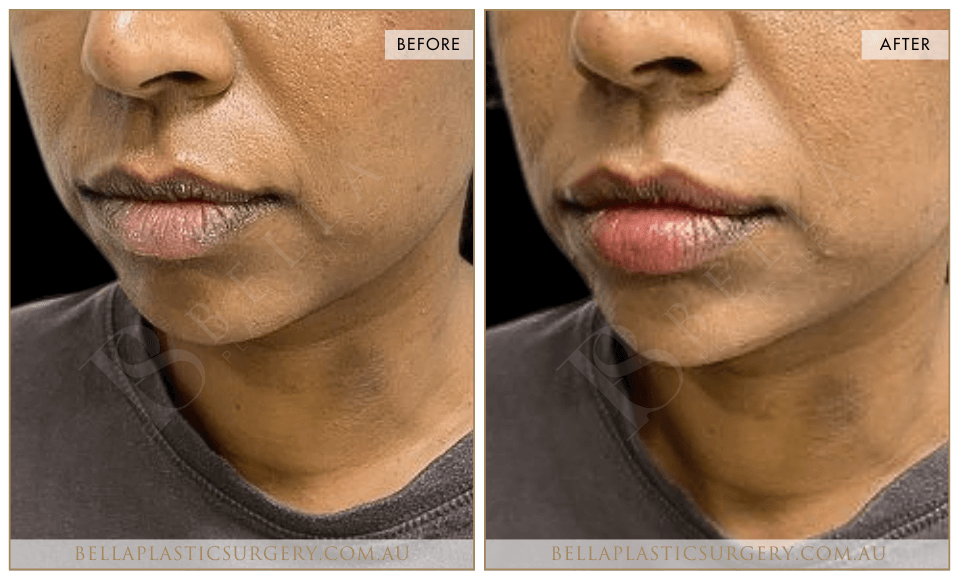
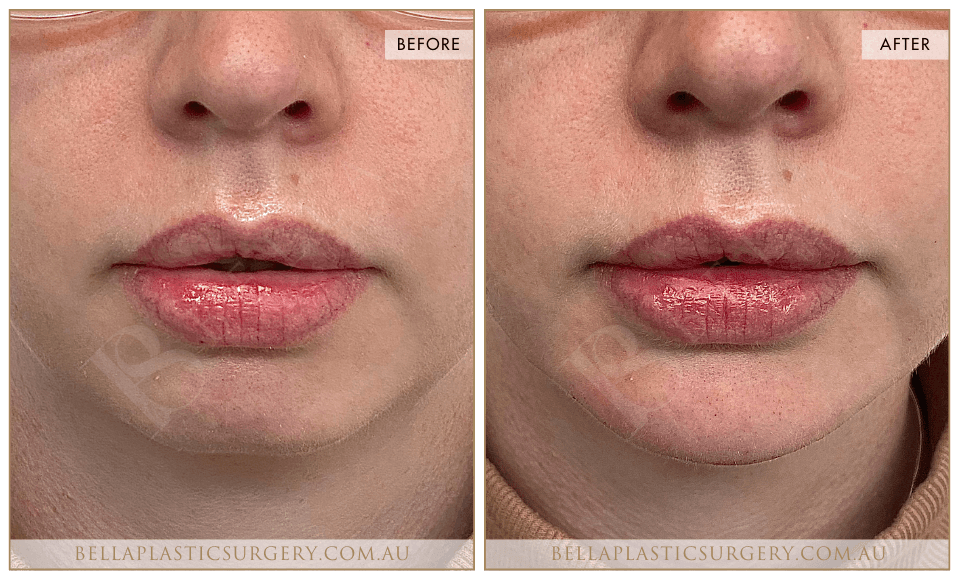
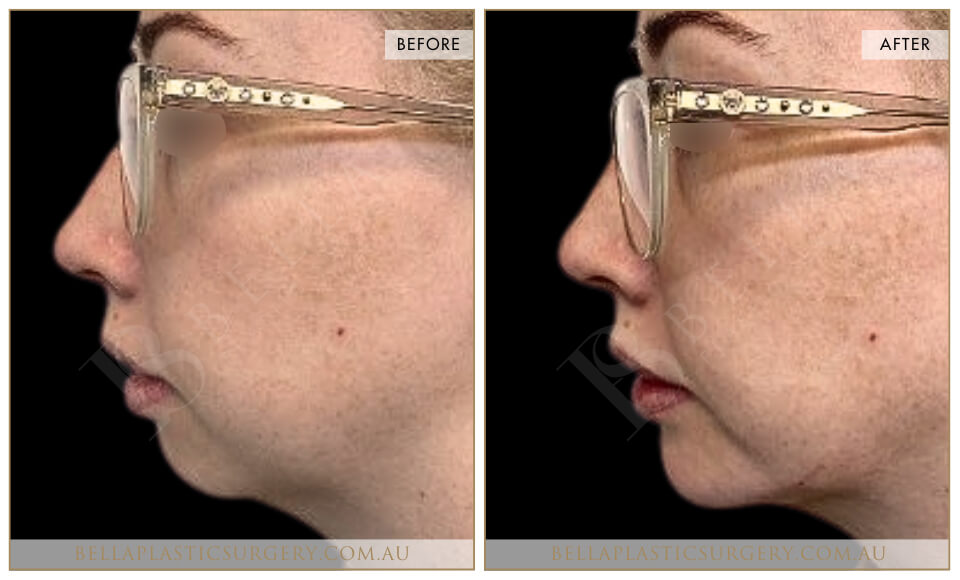
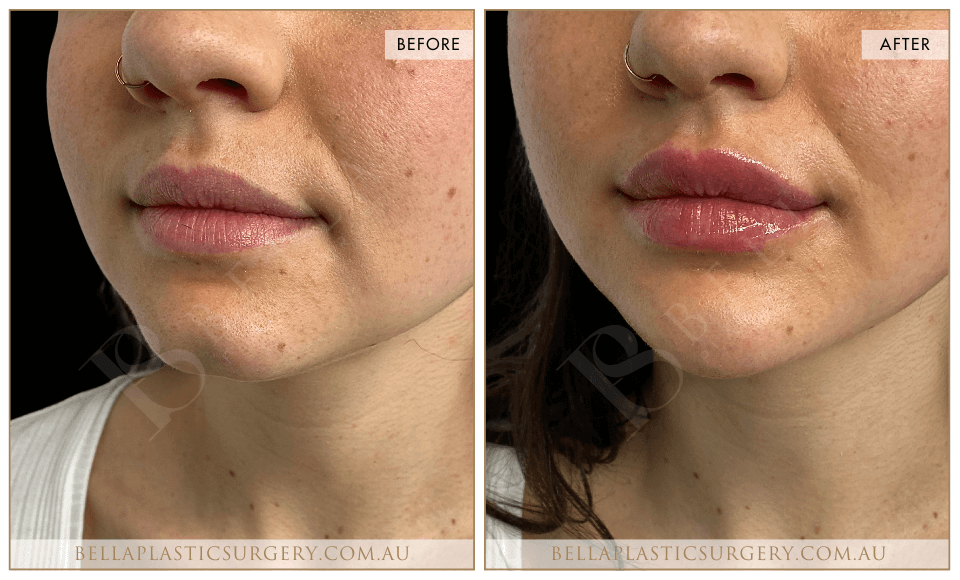
Chin Augmentation is a non-surgical treatment option that aims to support structural balance within the lower face and increase projection.
What is Chin Augmentation?
Non-surgical Chin Augmentation is a non-surgical treatment approach that aims to address facial harmony and symmetry through advanced non-surgical chin augmentation techniques.
What Type of Products are Used?
There are a range of products, that contain different consistencies which are often broken down into three main categories:
- Thin products – designed to last 3-6 months
- Mid-range products – designed to last 9-12 months
- Semi-permanent products – designed to last 18-24 months
These products are made from complex sugar molecules that naturally occur in your body and bind with water to support your skin and increase volume.
At Bella Plastic Surgery, we use only the highest quality products to achieve long-lasting results.
Potential Risks & Complications
All cosmetic procedures involve potential risks, and these should not be underestimated. Common and expected side effects can include redness, bruising, swelling, tenderness and temporary firmness at the treatment area.
Because the procedure involves penetrating the skin, there is also a risk of infection. A medical professional should assess symptoms such as increasing warmth, swelling, redness or pain. Although uncommon, vascular compromise can occur if the product enters or compresses a blood vessel, reducing blood flow to the surrounding tissue. Early recognition and prompt treatment are essential in these situations.
Rare complications may include changes in facial movement, altered sensation or neurological conditions such as Ramsay Hunt syndrome. Extremely rare but serious complications can include visual disturbance or blindness.
All potential risks and complications are thoroughly discussed during your consultation with both the cosmetic nurse and the prescribing doctor before treatment.
For more detailed information, please refer to the Potential Risks and Complications page.
First-Time Patient Requirements
If this is your first Chin Augmentation, you must attend a comprehensive in-person consultation before your treatment. Here, we’ll conduct a detailed medical history review, assess your facial anatomy and evaluate tissue characteristics. You’ll also be given a body dysmorphia screening assessment to complete.
You’ll be required to have a telehealth consultation with our prescribing doctor to confirm medical suitability.
Your treatment will only proceed once your suitability has been established and informed consent has been appropriately documented.
Returning Patient Requirements
If you are a returning patient, you’ll be required to complete an updated medical history so that we can identify any changes in your health, medications, allergies or cosmetic treatments. Your previous treatment area will be reassessed, tissue response will be reviewed, and overall suitability will be reconfirmed before proceeding with further placement.
We’ll ask for informed consent at each visit, regardless of your treatment history. The treatment will only be performed where clinically appropriate.
Post-Procedure Care
The following are very common side effects after treatment and should resolve with time.
- Swelling
- Bruising
- Redness
- Puncture Marks
- Asymmetry
- Tenderness
- Hardness
- Tightness
- Itching
To prevent and/or help minimise any bruising after your treatment:
- Application of a cold compress to the treatment area immediately and for at least 15minutes after.
- The regular intermittent application of cold packs during the first 24-48 hours may be beneficial. A cycle to consider is 10min on and 5min off.
- Sleep with the head elevated for the first evening.
- Vigorous exercise can increase blood pressure and aggravate any bruising that is developing – therefore, exercise should be avoided for the first 24 hours.
- You should avoid extreme heat for the first 24hrs (or until bruising has resolved).
- Topical creams that may help with bruising – reduction in the development and helping in the resolution.
- Arnica cream – apply liberally to affected area 3-4 x per day until resolution.
- Vitamin k cream – apply liberally to affected area 3-4 x per day until resolution.
Final Results
Your final results can take two to four weeks. You will likely require further treatments to achieve your desired results.
Aftercare
Please contact the clinic immediately on 1300 373 662 if you experience any inflammatory reaction and/or side effect. Late onset inflammatory response may occur at least 2 months after injection. If necessary, additional treatments, medications and/or surgery may be necessary.
If out of hours, please attend your local medical centre or emergency department.
- You may return to your normal activities (including driving immediately post-treatment.
- Please cleanse face with water and gentle cleanser. Avoid any active ingredients.
- Avoid makeup for at least 12 hours.
- Avoid prolonged sun exposure and extreme temperatures for at least 2 weeks post treatment.
- Avoid strenuous exercise or alcohol for 24 hours.
- Avoid touching or massaging the treatment area.
- Avoid facials, waxing, chemical peels, IPL, laser or any other skin treatments for at least 2 weeks after treatment.
As part of your post-treatment care plan, you will be provided with verbal and written post-treatment instructions.
Why Consider Chin Augmentation?
There is a variety of anatomical or proportional reasons individuals enquire about Chin Augmentation, such as:
- Interest in profile proportions
- Reduced chin projection
- A recessed or retrusive chin
- Structural changes following weight fluctuations
- An imbalance between the upper and lower face
- Desire for different lower face balance
During your initial consultation, all your questions regarding your chin and face will be discussed. Your face will also be assessed to determine whether it is clinically appropriate and suitable for you to proceed.
Your Chin & the Lower Face
The chin is a central component of the lower face’s overall structure. Therefore, assessing the chin cannot be done in isolation; its relationship to the lips, jawline and surrounding soft tissues must be considered.
In some individuals, applying volumising product to the chin alone may make it appear more prominent and less integrated with surrounding structures. Instead, where clinically appropriate, small amounts of product may be placed along the anterior lower jaw line. This supports a more gradual transition between the chin and jaw and provides more proportional balance.
Clinical Planning
At Bella Plastic Surgery, we use structured, conservative placement techniques, always considering anatomical boundaries and surrounding muscle function. We give careful attention to the depth of placement, symmetry, projection limits, functional movement and the presence of any existing product from previous treatments.
Excessive central volume or over-projection can negatively alter facial proportions and affect soft tissue movement. Therefore, we often stage treatment, reassessing the area over time to support balanced, controlled outcomes.
The Micro-Placement Technique
We sometimes use a controlled micro-placement technique when clinically appropriate. Small amounts of product are deposited, with untreated tissue remaining between placement points. This method supports gradual structural build, more even product integration and reduced tissue compression.
Micro-placement also reduces the likelihood of excessive swelling and provides greater control over distribution within specific anatomical planes. Volumising products attract water, so strategic spacing between deposits supports tissue accommodation and can help minimise the risk of prolonged fluid retention.
Product Volume & Staging Treatments
Chin Augmentation treatments are performed conservatively and usually staged across multiple appointments, with at least four weeks between appointments. This allows the tissues to settle so the area can be assessed before considering further placement.
We often use about 1 mL of volumising product during the initial session. Some individuals may require 2-4 mL over time, depending on their anatomical needs.
Volume requirements can vary significantly, depending on skeletal support, chin structure, tissue thickness and individual treatment planning.
Categories of Volumising Product
We select a volumising product based on your anatomical suitability and structural support requirements. Usually, very soft products are unsuitable for chin projection because of their structural limitations. We typically select medium-to-firm-textured products for their ability to maintain placement integrity in areas exposed to muscular activity and movement.
The choice of product, its suitability and anticipated longevity will be discussed during your initial consultation.
Forearm Prick Test
A dissolving agent is sometimes used after treatment if a correction is required or a complication arises. If you have never been exposed to a dissolving agent, we often recommend a pre-treatment prick test. This involves placing a small amount of the dissolving agent on the forearm, where it is observed for any abnormal response.
This precaution supports your safety by helping to reduce the risk of allergic reaction if a dissolving agent is required.
Treatment Day
You will be positioned upright to enable an accurate structural assessment of the lower face. Before treatment commences, we review the treatment plan, discuss the potential risks and answer any questions. Markings may be placed on your face at this time.
The duration of the procedure will depend on the amount of product required, the complexity of the procedure and whether it is part of a series of treatments as part of a staged approach. Immediately after the procedure, ice is applied to the area, and your immediate tissue response is monitored.
You will be given written and verbal after-care instructions, as well as after-hours contact information. In some instances, patients may be asked to send a clear image of the treated area approximately two hours post-treatment to help monitor tissue response.
Recovery
Swelling, bruising and tenderness may increase during the first 24 hours. Small puncture marks may be visible, and there may be mild asymmetry or temporary firmness while tissues respond and settle.
We recommend applying cold compresses to the area for the first 24 to 48 hours. Strenuous activity should be avoided during this time or until bruising has settled.
Bruising and swelling are usually most noticeable on days one to three, with swelling gradually decreasing on days four to seven. Bruising may persist for up to two weeks.
We recommend elevating the head of the bed for the first one to two nights to help reduce swelling.
Avoid makeup for the first 12 hours.
Alcohol consumption, strenuous exercise, excessive sun exposure and additional facial or light-based treatment should be postponed for the time advised by your cosmetic nurse.
Early Results & After-Care
The results of a Chin Augmentation procedure can be seen once swelling subsides. However, it takes several weeks for the tissues to stabilise and fully reveal the final results.
Final Results & Ongoing Care
As swelling settles, your results will gradually become clearer. However, it can take several weeks for the treated tissues to settle and stabilise fully. In some cases, additional treatment may be recommended depending on how your anatomy responds and whether a staged approach has been planned.
Occasionally, delayed inflammatory reactions can develop weeks or even months after treatment and should be assessed by a medical professional. If you notice any unexpected or worsening symptoms, please contact the clinic promptly. For urgent concerns outside of clinic hours, attend your nearest medical centre or hospital emergency department.
Long-Term Tissue Health Considerations
When creating a treatment plan, we consider the product volume, placement depth, treatment frequency and individual tissue behaviour. We place a strong emphasis on conservative dosing, long-term tissue stability and risk reduction.
However, all cosmetic volumising treatments carry risks, as further outlined below. These include fluid retention, structural changes, tissue remodelling and a fibrotic response. In some cases, changes may remain despite attempts to dissolve the product.
Treatment Cost
The cost of your Chin Augmentation will depend on the volume of product used in each treatment. All patients must have a comprehensive in-person consultation to determine an accurate price. If a staged approach is recommended, you will be presented with the associated costs in advance so that you can make an informed decision.
