

Skin tags are common benign growths that develop over time. Small and soft, they typically have a thin stalk and can vary in size, shape and colour. Skin tags are often removed for cosmetic reasons or because they become annoying or irritated.
What Are Skin Tags?
Skin Tags are thought to be formed due to a combination of skin friction and genetics. Many people develop Skin Tags; however, they are commonly associated with ageing, pregnancy, hormonal changes, weight fluctuations and insulin resistance.
Treatment Options For Skin Tag Removal
Several treatment options are available for Skin Tag Removal, depending on the location, size and width of the Skin Tag base.
Laser Skin Tag Removal
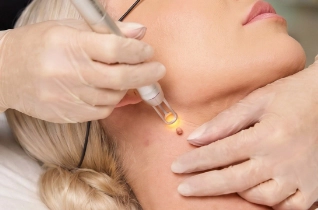
Laser Skin Tag Removal uses dual-laser technology to precisely treat medically assessed benign Skin Tags. The procedure can be performed on both the face and the body and is typically done without stitches.
During treatment, the laser removes the Skin Tags while simultaneously cauterising the small blood vessels. Usually, the treatment is relatively quick. There is minimal downtime depending on the size and number of Skin Tags being treated.
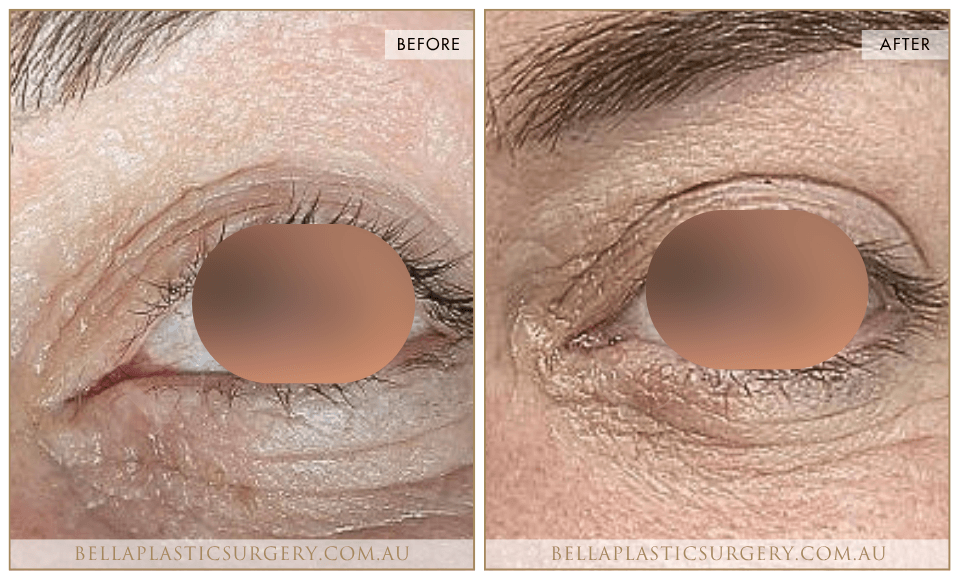
Most patients heal without issue. However, scarring or a pale mark may appear at the treatment site. Hearing outcomes vary from person to person.
Surgical Removal
Sometimes, practitioners use a surgical blade to remove Skin Tags. The Skin Tag is lifted with forceps, then a scalpel is used to cut it off at its base. Although this method can be effective, its suitability depends on the area being treated and the width of the Skin Tag’s base. Surgical removal does not cauterise the blood vessels, so bleeding and regrowth are more likely.
Radiofrequency (RF)
Radiofrequency uses heat energy to break down and remove tissue. Results vary depending on the amount of energy required and the size or width of the Skin Tag. Due to its reliance on heat, there is an increased risk of unwanted skin changes, including scarring or textural changes, depending on the healing process.
Combination Treatment
Sometimes a combination approach is preferred, depending on the Skin Tag’s size, base and location. Because laser treatment uses heat, there is a small chance the treated area may heal with a pale or slightly lighter mark. Therefore, the best method is determined on an individual basis.
At-Home Skin Tag Removal (Not Recommended)
Some individuals attempt to remove their Skin Tags on their own, using DIY methods such as cutting, tying a string around them, or pulling them off. This is not recommended, as DIY methods increase the risk of inflammation, infection, delayed healing and scarring.
Laser Skin Tag Removal: What to Expect
Your skin is first cleansed, and a topical anaesthetic may be applied to reduce discomfort. Sometimes, a local anaesthetic will also be used, depending on the location and number of Skin Tags being removed.
Using our laser device, the Skin Tags are removed. The device has a small pen tip head that allows us to target each lesion precisely while minimising impact on surrounding skin.
What causes skin tags?
Skin tags — those small, soft, often flesh-colored growths that hang off the skin — are incredibly common and usually harmless. While they might seem like a mystery when they first appear, there are several known factors that can contribute to their development.
Friction and Skin Rubbing
One of the most common causes of skin tags is friction. They tend to show up in areas where skin rubs against skin or clothing — like the neck, underarms, groin, under the breasts, or even on the eyelids. Constant rubbing can irritate the skin and trigger the formation of these little growths over time.
Genetics
If your parents or other close family members have skin tags, there’s a good chance you might get them too. Genetics play a role in how your skin reacts to friction and other triggers, so if skin tags run in your family, you’re more likely to develop them.
Age
Skin tags become more common as we get older, particularly after the age of 40. This might be due to changes in skin elasticity, slower cell turnover and other age-related factors that make the skin more prone to developing benign growths.
Weight and Body Composition
People who are overweight or obese tend to develop more skin tags. This is often because of increased skin folds and more friction in areas where the skin rubs together. That constant contact can create the right conditions for skin tags to form.
Hormonal Changes
Hormones can also play a role. Skin tags are especially common during pregnancy, likely due to the combination of weight gain and hormonal fluctuations. Conditions like polycystic ovary syndrome (PCOS) may also be associated with higher rates of skin tags.
What can I expect in the treatment?
Prior to treatment you skin will be cleansed and if required, topical anaesthetic will be applied to the treated area(s). The skin tag(s) will then be removed within minutes thanks to our laser device which is designed with a small pen-tip head, shaped to specifically target the individual skin tags, one-by-one, without affecting the surrounding skin.
Skin Tag Removal Cost
The cost of your Skin Tag removal will depend on the number of tags removed, the size and location and the treatment methods being used. A costing can be given after your in-person consultation.
Post-Treatment results
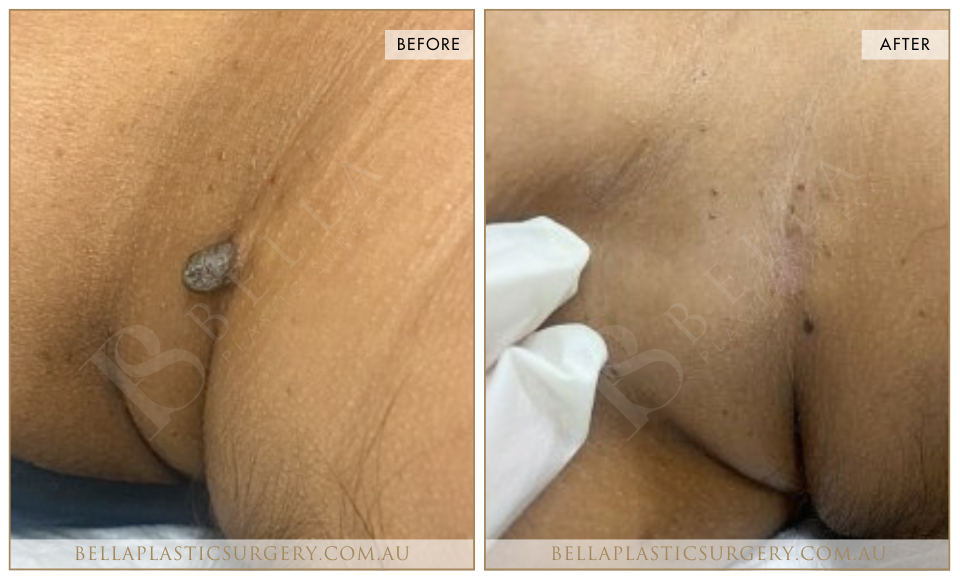
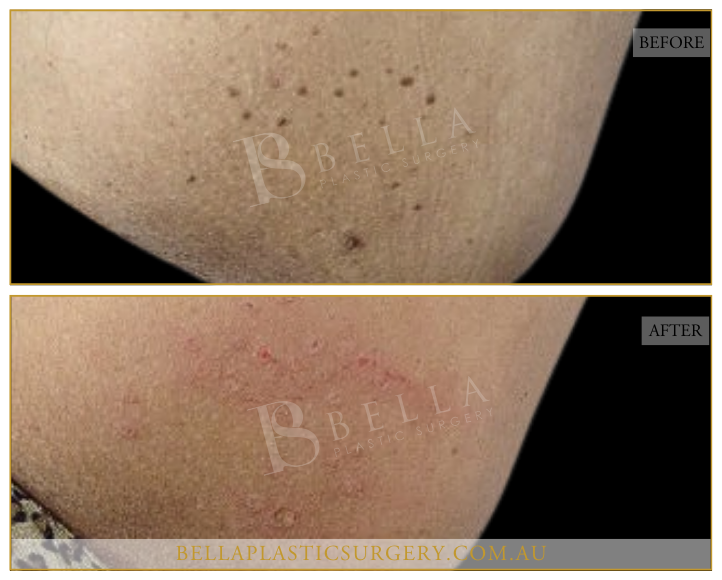
Following your treatment, the treated area(s) will be red, swollen and yellow oozing will likely occur. Within 24-48 hours, a scab will form.
The scab will allow for new skin to form in the treated areas and the redness, skin crusting and scabbing will continue for at least a couple of weeks, throughout the healing process.
For several weeks your treated areas will continue to heal and the scab will eventually fall off, leaving a red mark. This red mark is due to increased blood vessels that form to heal and repair the skin. In time, the redness will dissipate and the skin will heal. In some rare cases, the skin can become lighter or darker in the treatment area(s) – please refer to our ‘Potential Risks’ for more information.
Potential Risks & Complications
Potential risks of Skin Tag Removal are uncommon. However, they may include delayed healing, infection, darkening or lightening of the skin in the treated area, blistering or crusting, recurrence of the lesion and scarring (including hypertrophic or keloid scarring).
For more detailed information, please refer to the Possible Risks and Complications page.
Post-Procedure Care
Following your laser treatment, you may notice redness, bleeding, bruising, swelling and weeping at the site of treatment, which can last for several days to weeks.
It is normal for the treated area to feel a little sore and tender, for a few days post treatment. You will keep the treated area dry and intact following your treatment. We will provide you with a topical cream to be used 3-4 times a day to the treated area, until the area has healed.
- Please refrain from getting the treated area wet until scab has fully fallen-off the treated area.
- Avoid exposing the treated area to the sun for a minimum of 4 weeks following treatment.
- Do not pick as scabbing can lead to scarring.
- Makeup can be used over the treatment area so long as there is no extended redness, blistering or scabbing (mineral make-up is the best option).
- Avoid skin irritants such as hydroquinone, bleaching creams, tretinoin, retinol creams, benzoyl peroxide, chemical peels, glycolic acid, and salicylic acid for at least 2 weeks after the procedure.
- Avoid any rubbing or friction movements on the treated area for three days post treatment.
You will be requested to send an image of the treated area(s) 4 days post treatment via email.
Our clinic can be contacted contact on 1300 373 662 if you experience any inflammatory reaction and/or side effect. If necessary, additional treatments, medications and/or surgery may be necessary. If out of hours, please attend your local medical centre or emergency department.
We will arrange a follow-up appointment for six weeks post-treatment at our clinic. If at any time you have questions or concerns, you should contact our clinic to arrange a face-to-face appointment.
If required, you will be provided with topical cream, designed to be used post skin injury, that will provide nutrients to accelerate the skin healing process. In addition, we also offer Ligh Emitting Diode Treatment (LED) to accelerate the healing process.
Treatment Time
We ask patients to allow approximately 30 to 60 minutes for their appointment. Although the laser treatment is quick, we require time for you to complete your patient registration form, undergo a consultation, discuss the procedure and its potential risks and receive after-care instructions.
How Many Treatments?
Most Skin Tags are removed immediately on the first treatment. Depending on the size and base of the Skin Tag, a touch-up session may be required. In rare cases, Skin Tags may regrow, requiring further treatment for removal.
Comfort During Treatment
Most people tolerate Laser Skin Tag Removal well. However, a topical or local anaesthetic can be administered before treatment to keep you as comfortable as possible.
Recovery
Healing time varies, depending on the individual and the areas treated. After treatment, it’s normal for patients to experience redness, some yellow oozing, mild swelling and bruising around the treated area for up to one to two weeks.
The area may feel tender for a few days.
As part of the natural healing process, the body will form a temporary scab. This typically falls off after seven to 10 days. You must not scratch or pick at the scab this can increase inflammation and scarring.
After the scab has fallen off, the underlying skin may appear red due to newly formed capillaries. This redness will gradually fade over the following weeks to months.
NB: All patients are required to attend an in-clinic follow-up appointment within 4 days of treatment.
IMPORTANT: Before having your Skin Tags or any lesions removed, we recommend you have a skin cancer assessment.
After-Care
Keep the area dry, avoid picking at the scab and allow it to fall off naturally. Avoid UV exposure for at least four weeks. Avoid active skincare products (e.g., bleaching agents, acids or retinol) for two weeks. You’ll be given a topical cream to apply several times a day until the area has healed.
