

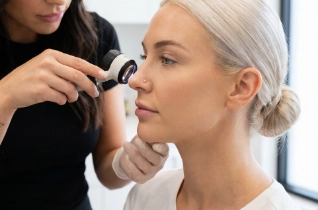
Fibrous Papules are small, raised, benign skin lesions that typically appear on the central face and nose. They are usually firm, dome-shaped and slightly pink or skin-coloured. Fibrous Papules are harmless; however, some individuals may prefer to remove them for cosmetic reasons or because they become irritated.
Treatment Options
Fibrous Papules can be removed either surgically or non-surgically.
Non-surgical Treatment Options:
Non-surgical treatments may be suitable for some benign lesions. They work by using controlled heat to break down the fibrous tissue that forms a lesion. Treatments may include:
- Diathermy
- Electrocautery
- Laser Fibrous Papule Removal
- Radiofrequency treatments
- Plasma-based treatments
NB: Laser treatment differs slightly from other non-surgical methods as the raised portion of the papule is removed immediately during the treatment, allowing the treated area to be assessed straightaway.
Surgical Treatment Options:
Surgical removal may be recommended in some cases, depending on the lesion’s characteristics. Typically, these techniques are considered if the lesion extends deeper within the skin or if Laser treatment is not considered appropriate. Surgical approaches include:
- Surgical excision
- Shave removal
- Laser Fibrous Papule Removal
Laser treatment is often used to remove Fibrous Papules, as it allows the raised component of the lesion to be precisely targeted. Laser can also treat delicate areas of the face while minimising the impact on surrounding tissues.
During treatment, controlled Laser energy ablates the raised fibrous tissue that forms the papule. Laser also seals small blood vessels within the lesion during treatment, helping to minimise bleeding and allowing the treated area to heal as a dry wound.
As the visible portion of the papule is removed during treatment, the treated area can be visually assessed immediately after.
PRE-TREATMENT SCREENING & ASSESSMENT
Most Fibrous Papules are benign; however, all skin lesions must be properly assessed before cosmetic treatment is considered. As Laser treatment removes tissue during the procedure, the lesion cannot be sent for pathology testing afterwards. Therefore, patients must have their lesions examined by a qualified skin cancer doctor before their appointment at our clinic.
Before treatment, patients must also provide a referral letter from their skin cancer doctor confirming the lesion has been assessed and, to the best of their knowledge, is benign.
NB: There is never complete certainty that a lesion is benign (noncancerous) before treatment. Patients must understand this limitation and the potential risks before proceeding with treatment.
THE LASER TREATMENT
Your initial consultation for Fibrous Papule Removal usually takes around 30 minutes. It includes time to discuss treatment options, risks and post-treatment care, and for the patient to consent.
If treatment proceeds on the same day, we may require additional time for preparation, including the application of a topical or local anaesthetic, where appropriate.
Laser Fibrous Papule Removal
Laser treatment is often used to remove Fibrous Papules, as it allows the raised component of the lesion to be precisely targeted. Laser can also treat delicate areas of the face while minimising the impact on surrounding tissues.
During treatment, controlled Laser energy ablates the raised fibrous tissue that forms the papule. Laser also seals small blood vessels within the lesion during treatment, helping to minimise bleeding and allowing the treated area to heal as a dry wound.
As the visible portion of the papule is removed during treatment, the treated area can be visually assessed immediately after.
Pre-treatment Screening & Assessment
Most Fibrous Papules are benign; however, all skin lesions must be properly assessed before cosmetic treatment is considered. As Laser treatment removes tissue during the procedure, the lesion cannot be sent for pathology testing afterwards. Therefore, patients must have their lesions examined by a qualified skin cancer doctor before their appointment at our clinic.
Before treatment, patients must also provide a referral letter from their skin cancer doctor confirming the lesion has been assessed and to the best of their knowledge, is benign.
NB: There is never complete certainty that a lesion is benign (noncancerous) before treatment. Patients must understand this limitation and the potential risks before proceeding with treatment.
The Laser Treatment
Your initial consultation for Fibrous Papule Removal usually takes around 30 minutes. It includes time to discuss treatment options, risks and post-treatment care and for the patient to consent.
If treatment proceeds on the same day, we may require additional time for preparation, including the application of a topical or local anaesthetic, where appropriate.
Healing & Recovery
Immediately Afterwards
Keep the Area Dry
Skin Changes
Topical Care
Sun Exposure
Light Emitting Diode (LED) Therapy
Sometimes, we may recommend Light-Emitting Diode (LED) therapy to reduce inflammation and support the skin’s healing response. The number and timing of sessions will depend on factors such as the lesion’s location and individual healing response.
Cost of Treatment
Every treatment plan for Fibrous Papule Removal is individualised. The cost will depend on factors such as the size and location of the lesion, the number of lesions treated and whether additional sessions are required. To determine pricing, all individuals must have an in-clinic consultation to assess the lesions and discuss treatment options.
Risks & Limitations
All Ablative Laser treatments carry potential risks and limitations, including:
- Skin marking or scarring: A degree of skin marking should be expected following lesion removal. The treated area may appear darker or lighter compared with the surrounding skin.
- Uncommon potential risks: although uncommon, potential risks include crusting, blistering, infection or delayed healing. Healing outcomes vary between individuals and can be influenced by factors such as lesion location, skin type and adherence to post-treatment care instructions.
HEALING & RECOVERY
Immediately Afterwards – The area may appear red and slightly swollen. There may be small amounts of yellow oozing for several days. The scab will typically form over the treated area and usually separates within a week or two. During this time, it’s essential not to pick or disturb the scab as this may increase the likelihood of scarring.
Keep the Area Dry – The treated area must remain dry during the healing phase. Excess moisture can soften the scab and increase the risk of premature separation, which can affect healing outcomes.
Skin Changes – After the scab has fallen away, the skin may appear red or pink due to the formation of new capillaries. This colour change typically fades over the following months.
We may request follow-up photographs or an in-clinic review to monitor your healing.
Topical Care – A medical-grade topical cream may be provided to support the healing process.
Sun Exposure – Avoid sun exposure for at least six weeks after treatment. During healing, sun exposure may increase the risk of pigmentation changes.
Light Emitting Diode (LED) Therapy
Sometimes, we may recommend Light-Emitting Diode (LED) therapy to reduce inflammation and support the skin’s healing response. The number and timing of sessions will depend on factors such as the lesion’s location and individual healing response.
Treatment Costs
Every treatment plan for Fibrous Papule Removal is individualised. The cost will depend on factors such as the size and location of the lesion, the number of lesions treated and whether additional sessions are required. To determine pricing, all individuals must have an in-clinic consultation to assess the lesions and discuss treatment options.
Potential Risks & Complications
All Ablative Laser treatments carry potential risks, complications and limitations, including:
- Skin marking or scarring: A degree of skin marking should be expected following lesion removal. The treated area may appear darker or lighter compared with the surrounding skin.
- Uncommon potential risks: Although uncommon, potential risks include crusting, blistering, infection or delayed healing. Healing outcomes vary between individuals and can be influenced by factors such as lesion location, skin type and adherence to post-treatment care instructions.
To learn more about potential risks, please see our Potential Risks and Complications page.
