

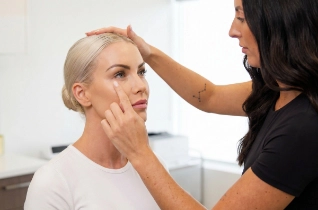
The under-eye area plays a significant role in the appearance of our face, especially over time. Hollowing under the eyes, dark circles, eyelid heaviness and fine lines can all appear, even if someone feels well-rested. However, there are multiple contributing factors, and every individual is different.
What is Tear Trough (Under-eye) Treatment?
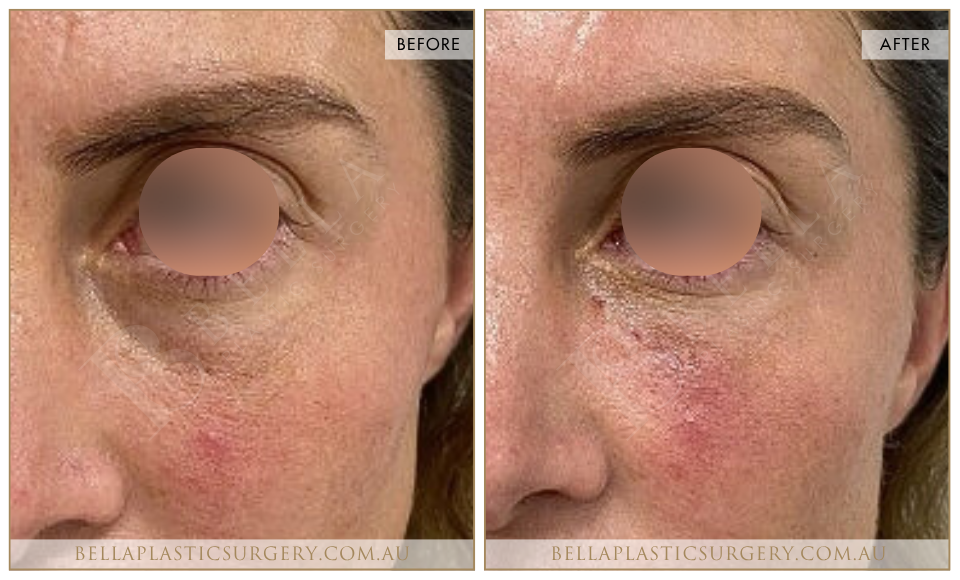
Whether its genetic factors, age related or a combination of both, when looking into a mirror, you may notice that your under-eye region is looking hollow and has dark shadows. A number of factors can contribute to under-eye hollowing, including fat and bone loss, skin pigmentation and underlying blood vessels.
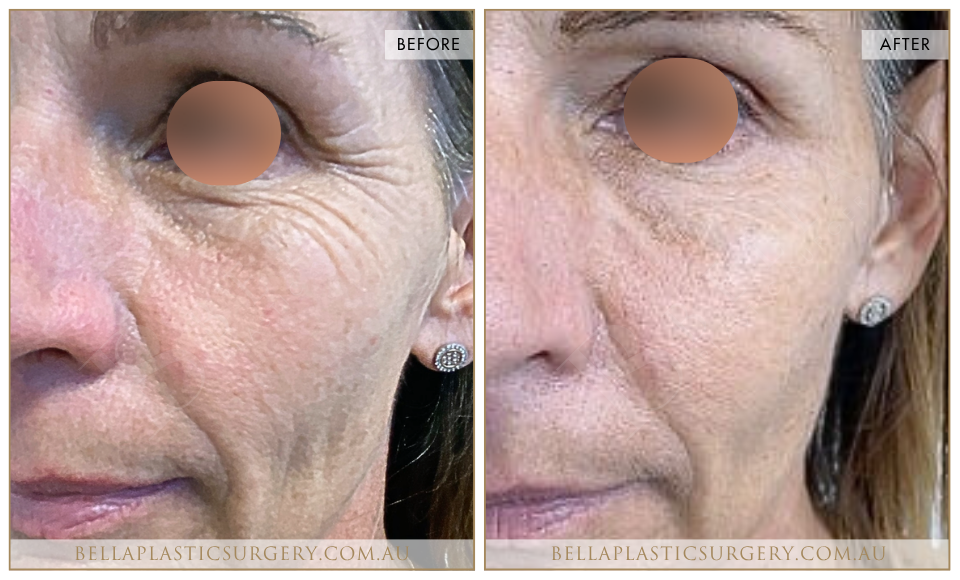
When treating the under-eye area, there are several considerations. Firstly, it is important that the whole under-eye area is treated to ensure that the junction of the upper cheek and under-eye junction is as seamless as possible.
Secondly, it is essential to use what is termed ‘micro-droplets’ of product to ensure that there is no visibility of the product under the eyes.
Thirdly, it is essential that the right technique is determined to maximise the aesthetic outcome – this can be needle only or both needle and cannula.
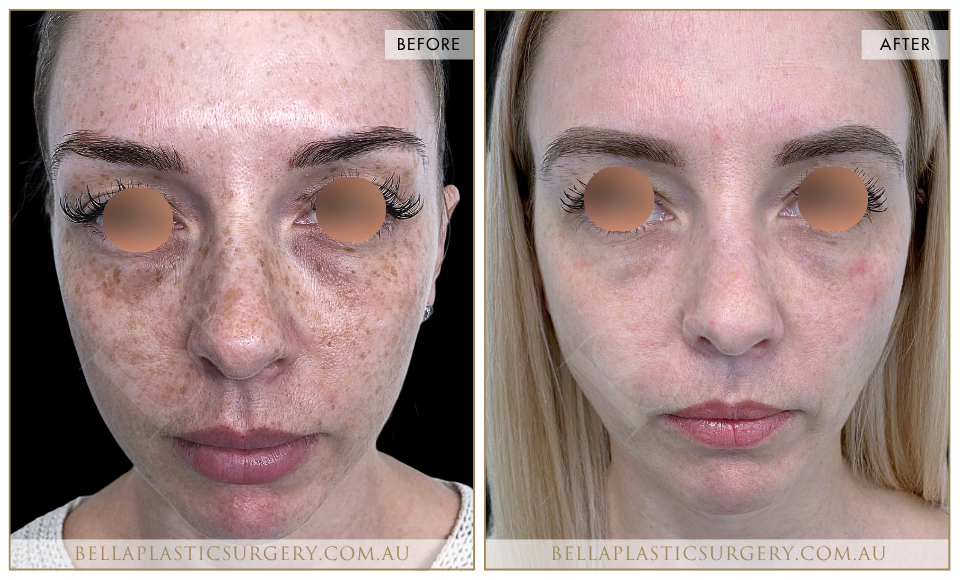
Note: In addition to treating under-eye hollowing, if it is assessed that there is also a skin pigmentation problem, we have a range of skin treatments specifically designed to treat those concerns.
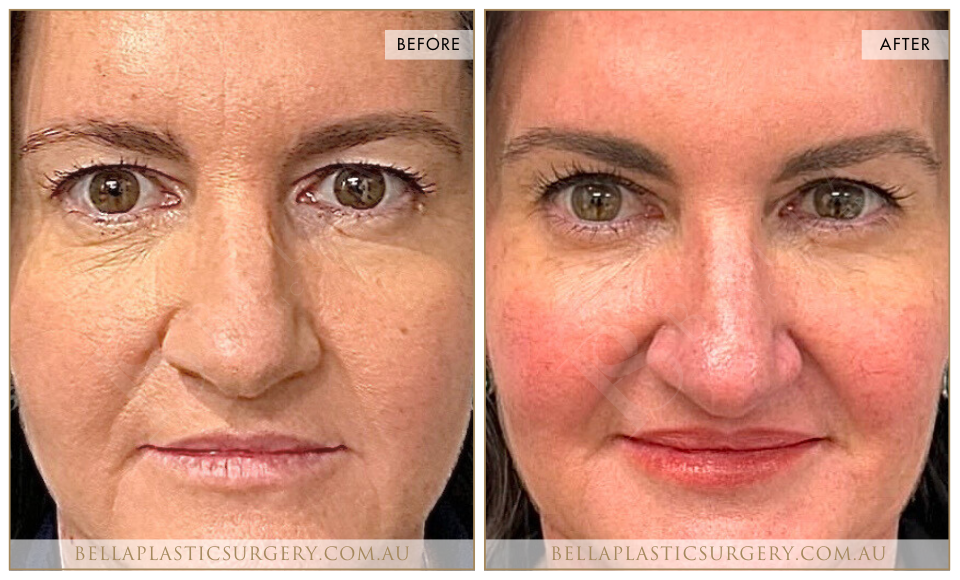
What Type of Products are Used?
There are a range of products, that contain different consistencies which are often broken down into three main categories: –
- Thin products – designed to last 3-6 months
- Mid-range products – designed to last 9-12 months
- Semi-permanent products – designed to last 18-24 months

These products are made from complex sugar molecules that naturally occur in your body and bind with water to support your skin and increase volume.
At Bella Plastic Surgery, we use only the highest quality products to achieve long-lasting results.
Potential Risks & Complications
All non-surgical aesthetic procedures carry a degree of risk, particularly in delicate regions such as the under-eye area.
To learn more about potential risks, please see our Potential Risks and Complications page.
Common Side Effects
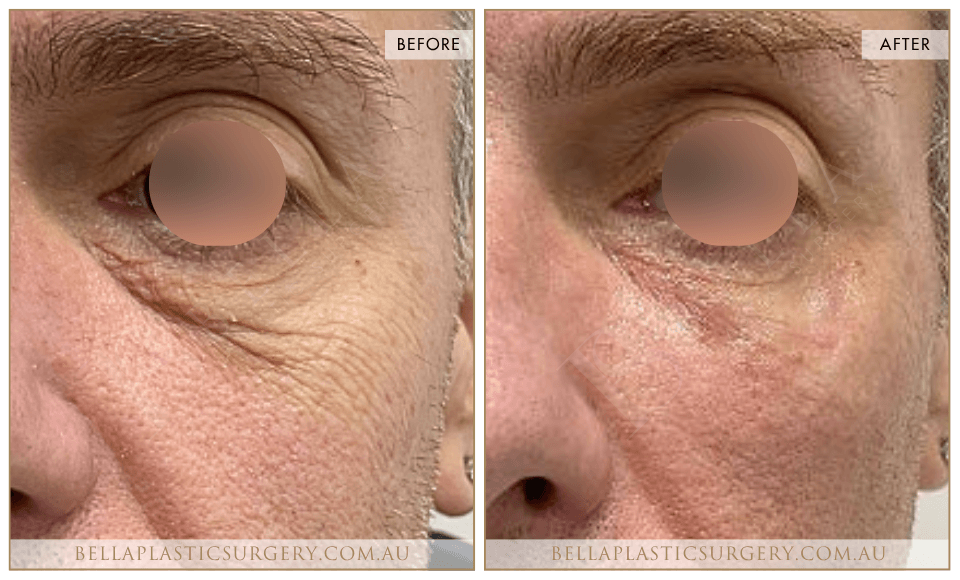
Common side effects may occur immediately or maybe delayed and include but are not limited to the following:
- Bruising
- Bleeding/Haematoma
- Inflammatory Reactions (swelling, Skin redness)
- Itchiness
- Tenderness
- Paraesthesia/Numbness
Adverse Reactions
Other adverse reactions may include:
- Induration or nodules
- Skin Discoloration
- Weak filling effect
- Infections including abscesses, granuloma, hypersensitivity
Extremely rare but serious adverse events associated with intravascular injection of products have been reported and include temporary and permanent visual impairment, blindness, cerebral ischemia or cerebral haemorrhage, leading to stroke, skin necrosis and damage to underlying structures.
Bruise Prevention
To prevent and help minimise any bruising after your treatment:
- Application of a cold compress to the treatment area immediately and for at least 15 minutes after.
- The regular intermittent application of cold packs during the first 24-48 hours may be beneficial. A cycle to consider is 10 min on and 5 min off.
- Sleep with the head elevated for the first evening.
- Vigorous exercise can increase blood pressure and aggravate any bruising that is developing – therefore, exercise should be avoided for the first 24 hours.
- You should avoid extreme heat for the first 24 hrs (or until bruising has resolved).
- Apply topical creams that may help with bruising – E.g., Arnica cream – apply liberally to affected area 3-4 x per day until resolution; Vitamin k cream – apply liberally to affected area 3-4 x per day until resolution.
Final Results
Your final results can take two to four weeks. You will likely require further treatments to achieve your desired results.
Contact the Clinic – Please contact the clinic immediately 1300 373 662 if you experience any inflammatory reaction and side effect. Late onset inflammatory response may occur at least two months after injection. If necessary, additional treatments, medications and surgery may be necessary.
If out of hours, please attend your local medical centre or emergency department.
Aftercare Instructions
After your precedure, please follow the below instructions:
- You may return to your normal activities (including driving immediately post-treatment.
- Please cleanse face with water and gentle cleanser. Avoid any active ingredients.
- Avoid makeup for at least 12 hours.
- Avoid prolonged sun exposure and extreme temperatures for at least 2 weeks post treatment.
- Avoid strenuous exercise or alcohol for 24 hours.
- Avoid touching or massaging the treatment area.
- Avoid facials, waxing, chemical peels, IPL, laser or any other skin treatments for at least 2 weeks after treatment.
As part of your post-treatment care plan, you will be provided with verbal and written post-treatment instructions.
About The Under-Eye Area
Changes in the under-eye area usually develop slowly. Various contributors can influence these changes, such as sun exposure, ageing, anatomy, skin quality and even previous treatments. These changes can result in pigmentation, volume loss, thinning of the skin, visible blood vessels and muscle movement patterns around the eyes.
Individuals often request under-eye treatment after experiencing the following:
- Shadowing or hollowing under the eye area
- Thinning under-eye skin or changes in skin texture
- Creasing or fine lines beneath or around the eyes
- Changes in how the under-eye blends into the upper cheek
- Darkening under the eyes, including vascular or pigmentation visibility
- Heaviness in the lower or upper eyelids
Addressing The Under-Eye Area
Rather than treating the tear trough in isolation, we address the entire under-eye area, including its transition into the upper cheek and midface. This approach helps maintain a more balanced transition between the eyes and surrounding areas, reducing the likelihood of creating focal points that may become more noticeable over time.
When addressing the under-eye area, several treatments are available, including volumising treatments, light-based therapy and skin care.
Volumising For Under-Eye Treatment
When volume loss is the cause of under-eye hollowing, some individuals opt for volumising treatment. With this treatment, our cosmetic nurses carefully choose the placement depth and distribution of volumisers to support the broader under-eye region, not just the tear trough. This way, we can help maintain a balanced appearance to the under-eye area.
Micro-Droplet Placement
When performing under-eye Volumising treatment, we use a microdroplet placement technique. Tiny, precise amounts of product are placed throughout the under-eye region.
This technique is used for several reasons. Volumising products attract water. Therefore, these tiny spaces between the treatment sites are intentionally left to allow for even tissue integration and to avoid unnecessary (short-term or persistent) swelling.
Your Under-Eye Procedure
ARRIVAL: Patients are requested to arrive one hour before their appointment time so that we can apply a topical anaesthetic. We may also apply ice to the area to help reduce discomfort and minimise the risk of swelling and bruising.
TREATMENT: You’ll be seated in an upright position for your procedure so that all facial structures are in a natural position. Treatment takes approximately one hour, depending on your treatment requirements and anatomy.
AFTER TREATMENT: We apply ice to the area. We will also share post-treatment instructions with you both verbally and in writing. You’ll be asked to send us a clear image of the treated area approximately two hours after treatment so we can monitor it.
Recovery After Your Under-Eye Treatment
- THE EVENING OF YOUR PROCEDURE: Tenderness, swelling and bruising can increase. This will typically resolve with time. Initially, there may be minor puncture marks. Temporary firmness, tightness and asymmetry can initially occur as the tissues respond and slowly settle.
- DAYS 1 to 3: Swelling and bruising often become noticeable.
- DAYS 4 to 7: Swelling typically continues to reduce. Bruising can persist for up to two weeks or longer in some cases.
Final Results & Ongoing Care
The final results following under-eye tear trough treatment will be visible over two to four weeks, once swelling has subsided, and tissues have stabilised. In some cases, further treatments will be required, depending on the treatment response and the individual’s anatomy.
If you experience any unexpected or worsening inflammatory response, please contact the clinic immediately. Late-onset inflammatory reactions can occur weeks to months following treatment. They may need further assessment or management.
If you have concerns outside clinic hours, please go to your local medical centre or the emergency department at your hospital.
Other Upper & Under-Eye Area Treatments
Heavy Upper & Lower Eyelids
Specific patterns of muscle movement (rather than volume or skin quality) can cause heavy eyelids. Typically, ongoing contractions of the muscles surrounding the eyes can cause changes in eyelid position and the development of fine lines.
When appropriate, excessive muscle contraction can be treated with a muscle relaxant. This softens the dynamic lines, allowing the eye area to sit in a more relaxed position.
Muscle relaxant treatment is typically quick. The effects become noticeable over one or two weeks.
Under-Eye Dark Circles
Pigmentation, loss of volume, vascular visibility and muscle activity around the eyes can all influence the appearance of dark circles. By developing a treatment plan, we can consider which factors contribute to this appearance.
Muscle relaxant treatment can sometimes be considered for some individuals. This treatment minimises excessive muscle activity and addresses the eyelid position. Once muscle activity has been addressed, we can reassess the under-eye area to determine whether volumising or additional treatments are appropriate.
When shadowing is caused by volume deficiency, we may introduce volumising treatment along the outer under eye region, blended into the upper cheek support natural contour integration.
Other Under-Eye Treatments
Laser & Other Light-based Therapies
Aside from volume changes, the under-eye area can also be affected by pigmentation, redness and visible blood vessels. In these cases, we may address these presentations with laser or other light-based therapies.
Laser technology targets pigment or blood vessels, which are then gradually processed and cleared by the body. Multiple sessions are often required, with treatment tailored to individual skin type and response.
Depending on an individual’s anatomy and skin presentation, we may use these treatments in conjunction with muscle relaxants and skin volumisers.
Medical-Grade Skincare
An individual’s skin quality strongly influences the appearance of the under-eye area. Changes in skin texture, thinning and reduced elasticity all affect the under-eye appearance. Medical-grade skincare can support skin health and complement in-clinic treatments such as muscle relaxants.
Although skincare will not replace in-clinic treatments, it can support overall skin quality and help address changes in texture and appearance.
If under-eye pigmentation or visible vascular features are present, we may also discuss incorporating laser treatments into a broader treatment plan.
Special Considerations In The Under-Eye Area
Cosmetic nurses performing under-eye treatment should be appropriately trained and thoroughly experienced in aesthetic medicine. The under-eye area presents several factors that must be carefully considered, including thinning skin, the Tyndall effect, and puffiness and fluid retention. There are also factors such as whether the patient has had previous under-eye treatments, any considerations regarding dissolving products, and whether the patient has been refused under-eye treatment by another practitioner.
Thin Skin
The delicate nature of under-eye skin means treatment planning must be approached with care. However, having thin skin does not automatically rule out tear trough treatment. The choice of technique, product and overall approach is critical when working in this area. In cases where the skin is particularly fine, a needle-based technique is often selected to provide greater precision over placement depth and the amount of product used. Although this method may result in more noticeable bruising initially, this typically settles as healing occurs and the tissues stabilise.
Tyndall Effect
The skin under the eyes is naturally fine and continues to thin as part of the ageing process. If volumising product is placed too close to the surface, used in excess, or applied in a way that does not suit an individual’s anatomy, a blue-grey or shadowed discolouration known as the Tyndall effect can develop. This risk can be reduced through careful product selection, appropriate placement depth and conservative use of volume.
Puffiness and Fluid Retention
Under-eye swelling or puffiness may occur when product selection, placement or volume does not sufficiently account for tissue behaviour or lymphatic drainage. Over time, product migration can also contribute to this appearance. Using small amounts of product, introducing volume gradually and distributing it evenly across the under-eye and upper cheek region can help reduce tissue overload and lower the risk of ongoing puffiness. This is particularly the case in those who are prone to swelling.
Previous Under-Eye Treatment and Dissolving Considerations
Individuals who have previously had tear trough or under-eye volumising treatments may still have residual product within the tissues. If the area appears persistently swollen, feels chronically irritated, or no longer reflects the individual’s aesthetic goals, further volumising treatment is generally not advised.
Adding more product where existing material remains can increase the risk of prolonged puffiness, fluid retention, inflammation or surface irregularities. In such cases, dissolving treatment may be recommended as a first step. Removing or reducing residual product allows the tissues to settle and creates a clearer foundation for future treatment planning, where appropriate.
Being Told You Are Not Suitable for Tear Trough Treatment
Some people explore under-eye treatment after being advised elsewhere that they are not suitable candidates, often because of thin skin, prior treatments or the complexity of the under-eye area.
While not everyone is suited to every treatment option, non-surgical approaches may still be considered following a thorough assessment. A detailed evaluation of anatomy, skin quality and treatment history allows for a personalised treatment plan, rather than applying a uniform approach to every individual.
Imaging & Baseline Assessment
Magnetic Resonance Imaging (MRI) and Ultrasound
In some cases, particularly when the patient has had previous volumising treatments and there is some uncertainty about the treatments, we may recommend diagnostic imaging as part of the assessment.
MRI: An MRI provides a detailed evaluation of soft tissues and can help identify the depth and distribution of previously placed product, fibrosis, scar tissue, areas of fluid retention (oedema) and features that may indicate chronic information within the under-eye or midface region. MRA can also help determine how soft tissues have changed after repeated treatments.
Ultrasound: Ultrasound imaging can be used as an additional assessment tool in select situations. It provides a real-time visualisation of superficial soft tissues and can help identify the presence and approximate location of fluid collections, previously placed products or tissue irregularities. When used appropriately, ultrasound can support clinical decision-making by helping establish a clearer baseline before dissolving or further treatment.
The most appropriate imaging method is selected on a case-by-case basis, and based on an individual’s clinical history, examination findings and broader treatment planning considerations.
Individualised Treatment Planning
Every patient must be thoroughly assessed to allow multiple factors to be considered. These factors include tissue behaviour, anatomy, previous treatments and longer-term implications. Importantly, under-eye presentations should not be addressed solely by volumising treatments.
Sometimes, treatment is done in stages, combined with other therapies, or delayed to ensure safety and optimal results. Your health, tissue condition and professional assessment guide our cosmetic nurses’ decisions.
Lower Eyelid Surgery (Blepharoplasty) vs Non-surgical Options
When an individual is enquiring about under-eye skin laxity, we often initially explore non-surgical treatment options, such as skin-focused treatments, laser-based therapies or volumising treatments. These treatments are aimed at supporting the underlying structures and skin quality.
However, sometimes, non-surgical treatments may not be enough to address the issues, and surgical options such as lower eyelid surgery (blepharoplasty) may be more suitable. To make an informed decision regarding treatment options, an individual must undergo a thorough assessment and discussion of available options.
